
Motel Parking Convenience Checklist for a Smoother NorthCon=
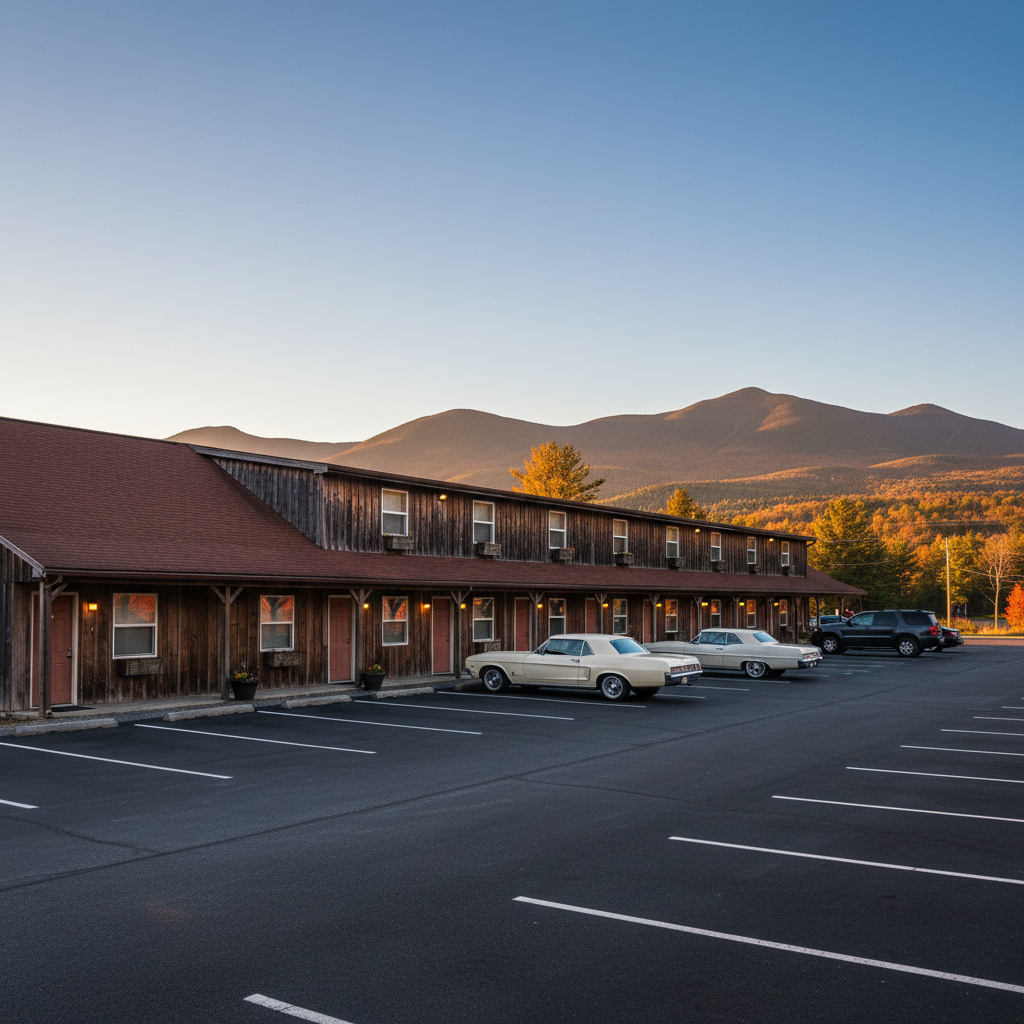
Use this motel parking convenience checklist to plan easier arrivals, safer unloading, and smoother seasonal stays at Briarcliff Motel in North Conway.
Last updated: October 2026
What should a motel parking convenience checklist include?
A useful checklist covers more than whether a property has a parking lot. It helps you evaluate the distance between the vehicle and room, lighting, access after dark, winter footing, unloading space, vehicle size, and the way parking fits your itinerary. These details matter most when you will make several trips between the car and room.
For a North Conway motel, parking is part of the travel experience because many guests arrive with skis, strollers, coolers, hiking equipment, outlet purchases, or wet-weather layers. A short walk can be manageable for a couple with carry-on bags but inconvenient for a family returning after dark or a guest who prefers to limit stairs and distance.
Before making a reservation
- Ask where guests park: Find out whether spaces are on site, near the room, in a central lot, or in an overflow area.
- Confirm availability: Ask whether parking is included, whether spaces are first come, first served, and whether a second vehicle requires advance notice.
- Discuss room location: If frequent vehicle access matters, request a room adjacent to convenient parking.
- Check access needs: Ask about stairs, curbs, uneven surfaces, and the shortest route from parking to the entrance.
- Plan for your vehicle: Mention a rooftop box, hitch rack, trailer, large SUV, or other vehicle feature before arrival.
- Ask about late arrival: Confirm office hours and the procedure for arriving after the usual check-in period.
- Ask seasonal questions: After a snowstorm, ask how guests should approach plowed areas and whether walkways are cleared on a particular schedule.
What “convenient parking” does and does not promise
Convenient parking does not automatically mean a reserved space directly outside every door. It means the arrangement reduces unnecessary walking, carrying, waiting, or uncertainty for the type of stay you have planned. Availability, room assignment, weather, and vehicle size can all affect the practical experience.
For context, Conway’s design standard identifies 1.1 parking spaces per lodging unit for hotels, motels, and lodging houses. That standard is a town planning requirement, not a promise that a particular guest will receive a specific space, so it is still sensible to ask the property about current arrangements.
How to use the checklist from arrival through departure
The easiest way to use a parking checklist is to divide it into four short routines: before driving, arrival, daily returns, and departure. Each routine answers a different question and prevents the most common source of frustration - trying to solve everything while tired, carrying luggage, or standing in snow.
1. Prepare before you leave home
- Place identification, medication, chargers, pajamas, and children’s essentials in one clearly marked arrival bag.
- Put snow tools, a flashlight, and traction footwear where they can be reached without emptying the trunk.
- Keep heavier items stable and low so they do not shift during the drive.
- Save the motel address - 2304 White Mountain Highway, North Conway, NH 03860 - in your navigation app.
- Call ahead if you have a late arrival, special mobility needs, a large vehicle, or an unusual amount of equipment.
2. Park and unload in the right order
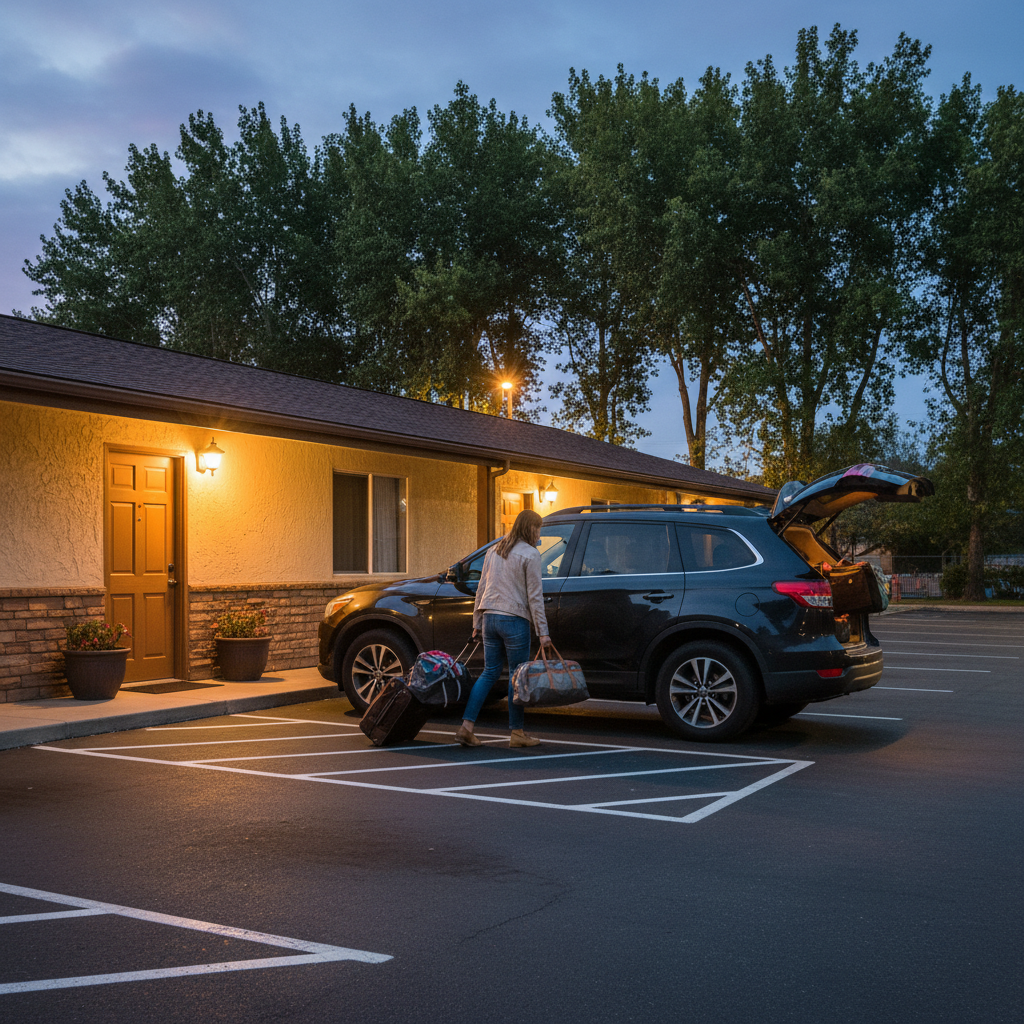
When you arrive at Briarcliff Motel, choose a practical space rather than rushing to unload wherever the vehicle first stops. A room-adjacent space, when available, shortens the route and makes repeated trips easier. Keep the vehicle within its marked area, avoid blocking travel lanes, and leave room for other guests to move safely.
- Collect the arrival bag, keys, identification, and anything needed for the first night.
- Take children, pets if applicable, and people with mobility concerns inside before moving bulky gear.
- Lock the vehicle between trips, even when it is only a short walk away.
- Bring in medication, electronics, documents, and other valuables rather than leaving them visible.
- Move bulky equipment last and keep wet or dirty items together.
An enclosed porch can provide useful covered staging space at properties that offer one. Use it to organize shoes, towels, outer layers, or pool items, but keep walkways clear and follow the property’s instructions about what may be stored there.
3. Make daily returns predictable
Returning to the same general parking area and using the same route can make late arrivals easier, particularly after a long day on the road. Before walking away, check that windows are closed, doors are locked, and bags or purchases are not visible through the glass.
- For ski days, keep boots, helmets, and goggles together instead of scattering them across the vehicle.
- For outlet trips, consolidate purchases into closed totes and move valuable items indoors.
- For pool days, keep towels, sandals, and sunscreen in a separate top-loading bag.
- For hiking days, refill water and repack a first-aid kit before going to sleep.
- After rain or snow, check your footing before stepping down and watch for puddles, ice, and plow berms.
4. Prepare for departure
Departure is faster when you do not leave every packing decision until morning. Pack nonessential clothing and souvenirs the night before, then load the vehicle in a stable order. Heavy items belong low and toward the center; soft bags can fill gaps without obscuring the driver’s view.
Before leaving the room, inspect the enclosed porch, bathroom, under-bed area, charging outlets, and any place where a small item may have been set down. Make a final walk around the vehicle for snow, ice, open doors, loose straps, and items left on the ground.
Which motel parking setup is most convenient?
Different parking layouts solve different problems. Room-adjacent parking is usually strongest for frequent unloading, while a central lot may provide simpler circulation. Overflow parking can be useful during busy periods but requires more planning. The right choice depends on how often you will access the vehicle, how much you carry, and whether anyone in your party needs a shorter route.
| Setup | Best use | Advantages | Questions to ask |
|---|---|---|---|
| Room-adjacent | Families, skiers, shoppers, frequent trips | Shortest carrying distance and quick access | Is it available for the requested room and dates? |
| Central on-site lot | Light packers and simple overnight stays | Straightforward circulation and a defined parking area | How far is the route and are there stairs or curbs? |
| Overflow area | Peak weekends or multiple vehicles | Additional capacity when nearer spaces are busy | How are guests directed there after dark or during snow? |
| Street or shared parking | A contingency when permitted | May provide another option near the property | What signage, restrictions, and overnight rules apply? |
Room-adjacent parking at Briarcliff Motel
Briarcliff Motel is a renovated, family-friendly inn on Main Street in North Conway. Its confirmed property features include rooms adjacent to convenient parking, mountain-view rooms, enclosed porches looking toward an outdoor heated pool, and extended office hours from 8AM to 10PM EST. Special arrangements are available for late arrivals, so guests who expect to reach North Conway after dinner should contact the motel in advance.
These features are particularly useful for a trip that involves repeated vehicle access. A family can unload a stroller and overnight bag first, a skier can retrieve equipment without a long carry, and a shopper can make several organized trips after visiting the nearby outlet area. Room assignment and parking availability can vary, so make the request when reserving rather than assuming a particular space is guaranteed.
How should you adjust the checklist for North Conway weather?
The White Mountains can make a short parking route feel very different from one day to the next. Snow, freezing temperatures, rain, wet leaves, and summer heat affect footing, loading time, and what should remain in the vehicle. A seasonal checklist is more useful than treating parking as a fixed experience.
Winter and early spring
- Keep a scraper, snow brush, gloves, and a compact shovel accessible.
- Clear snow from the roof, lights, windows, mirrors, and license plate before driving.
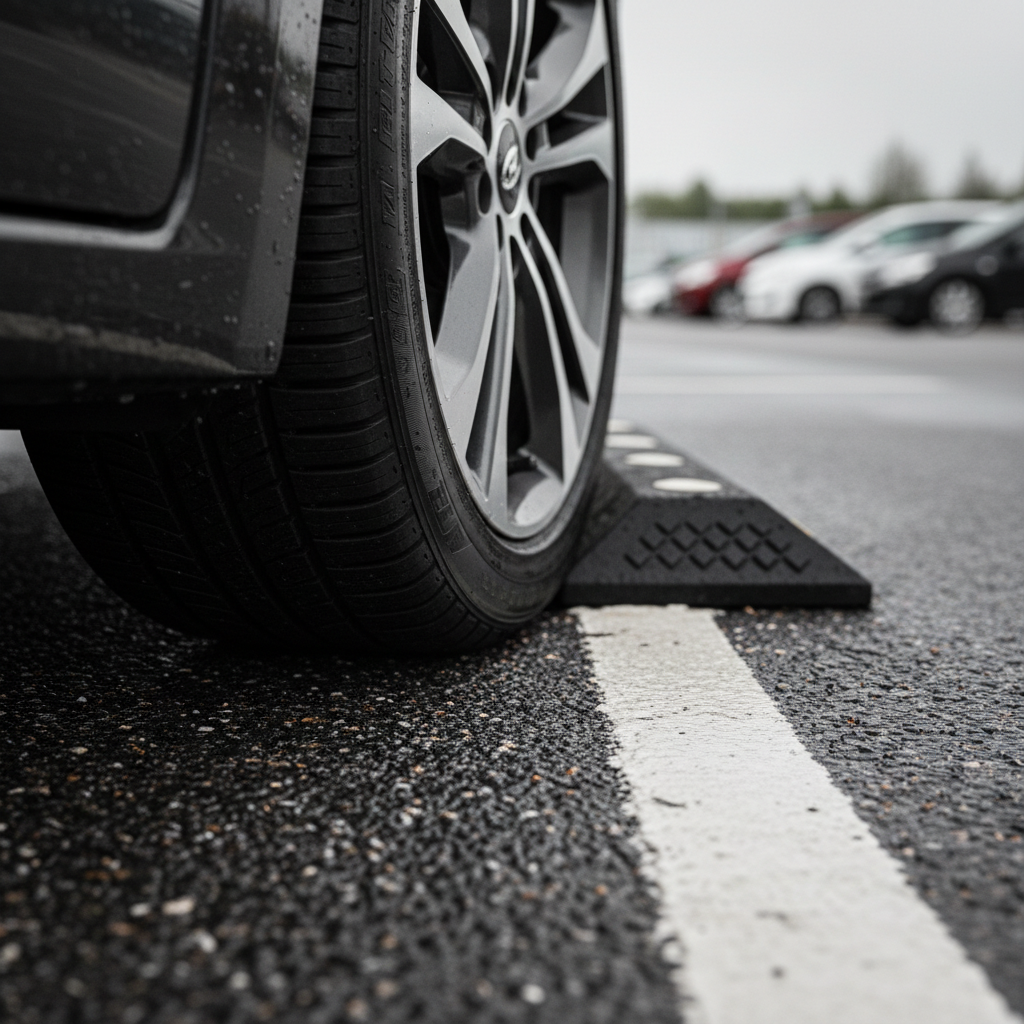
- Look for packed snow or ice near wheel stops, curbs, and the edge of plowed lanes.
- Do not assume a berm is stable; step down carefully and use traction footwear.
- Load skis and boards so they can be reached without unpacking the whole vehicle.
- Allow additional time after a storm and ask the motel where guests should park while clearing is underway.
Guests heading toward Cranmore, Attitash, Black Mountain, or Wildcat should be especially deliberate about loading. Wet boots and gloves can be grouped in a washable tote, while an enclosed porch may offer a practical place to stage damp items before they are organized inside.
Summer
- Keep water, sunscreen, towels, and a change of clothes in a separate day bag.
- Do not leave heat-sensitive food, medication, electronics, or valuables in a hot vehicle.
- Use a covered staging area, where available, to separate wet pool items from dry luggage.
- Plan extra time on busy weekends when many guests may be arriving or returning at similar times.
Briarcliff Motel’s outdoor heated pool and enclosed-porch room options can make pool days easier to organize. Keep the route between the room, vehicle, and pool clear, and return belongings to the room rather than allowing them to accumulate beside the parking space.
Fall
Leaf-peeping trips often involve scenic drives, changing daylight, and extra layers. Arrive before dusk when possible so you can identify the room route and parking position without relying on a phone flashlight. Keep a jacket, blanket, and small daypack near the top of the vehicle rather than buried beneath luggage.
Rain and freeze-thaw periods
Wet leaves, puddles, and refrozen surfaces can create hazards even when the lot appears clear. Wear shoes with dependable traction, use a flashlight after dark, and avoid carrying more than you can manage while watching the ground. If a path looks unsafe, ask the front desk whether another route or parking position is more practical.
How do you decide whether parking is convenient enough?
Use your itinerary, not a generic definition, to judge convenience. A guest who plans to park once and walk or dine nearby may value a simple on-site lot. A family visiting attractions, a skier returning with wet gear, or a shopper carrying multiple bags will usually benefit more from room-adjacent access.
Choose room-adjacent access when you expect frequent trips
Prioritize the shortest practical route if your group includes young children, older travelers, anyone with limited mobility, or guests who need to move equipment several times per day. It is also useful when you expect naps, changing weather, or repeated trips to retrieve food and clothing.
Prioritize lighting and footing for late returns
A close space is not the only consideration after dark. Ask about the route from the lot to the room, look for clear sightlines, and carry a small flashlight if you arrive late. Keep the vehicle locked between trips and avoid leaving purchases visible.
Ask specific questions instead of using broad wording
“Is parking convenient?” can produce an answer that is technically correct but not useful for your party. Better questions include: “Can I request a room near parking?” “Are spaces on site?” “What is the late-arrival process?” “Are there stairs or a snow berm on the route?” and “Can you advise on parking for a vehicle with a rooftop box or trailer?”
Current evidence from other North Conway lodging properties shows that parking details can differ substantially: some list complimentary self-parking, some identify accessible spaces, some provide EV charging, and some accommodate buses, trucks, trailers, or RVs. Those examples should not be treated as Briarcliff Motel amenities. They do show why guests should confirm the exact feature they need directly with their chosen property.
What should you bring to make parking easier?
The best parking tools are small, accessible, and matched to the season. They should reduce carrying, improve visibility, or protect belongings rather than create more loose items to manage.
- Two folding totes: Use one for the first-night essentials and one for wet, dirty, or activity-specific gear.
- Compact flashlight or headlamp: Keep it in the passenger compartment for after-dark arrival.
- Snow brush and scraper: Store them where they can be reached before the trunk is unloaded.
- Collapsible wagon: Consider one for a central or overflow lot when the property permits its use.
- Microfiber towels: Useful for wet stroller wheels, boots, or totes.
- Phone checklist: Include room number, vehicle location, late-arrival instructions, and a departure sweep.
A five-minute arrival routine
- Confirm the room and identify the safest route from the vehicle.
- Take the arrival bag and essential people inside.
- Lock the vehicle before returning for another load.
- Group activity gear by purpose rather than carrying loose pieces.
- Place wet or dirty items in one designated tote and clear the path.
This routine works for a late dinner arrival, a family weekend, an outlet-shopping trip, or a ski morning. It is deliberately simple: the goal is to reduce decisions when everyone is tired.
Examples for common North Conway stays
- Family attraction visit: Bring the stroller, snacks, and sleepwear in the first trip so children can settle while adults finish unloading.
- Ski weekend: Keep boots, helmets, and gloves together, then load skis last for an uncomplicated morning departure.
- Outlet shopping: Use a closed tote for receipts and purchases, and move higher-value items indoors rather than leaving them in view.
- Hiking day: Refill water and place daypacks near the door the night before.
- Late arrival: Call ahead, keep a flashlight accessible, and make the first trip about keys, medication, and overnight needs.
- Multi-room group: Agree on a shared loading area without blocking lanes, then distribute gear once everyone is inside.
- Mobility-conscious stay: Request the shortest practical route and ask about stairs, curbs, and winter footing before arrival.
Printable motel parking convenience checklist
- Room location and parking relationship confirmed
- On-site parking availability and any restrictions confirmed
- Late-arrival instructions and office hours confirmed
- Vehicle size, trailer, rack, or second-vehicle question discussed
- Arrival bag packed separately from bulky luggage
- Flashlight, snow tools, and suitable footwear accessible
- Vehicle locked between unloading trips
- Valuables, medication, and documents brought inside
- Wet and dirty gear grouped in a separate tote
- Parking route checked for lighting, stairs, curbs, and footing
- Departure packing started the night before
- Room, porch, vehicle, and parking space checked before leaving
Frequently asked questions
Can I request parking close to my room at a North Conway motel?
You can ask whether a room adjacent to convenient parking is available for your dates. At Briarcliff Motel, rooms adjacent to convenient parking are a confirmed property feature, but room assignments and availability can vary. Make the request when reserving and explain if frequent in-and-out access, mobility, children, or activity equipment makes it important.
What should I ask about parking before a late arrival?
Ask how to access the property, where to park, how keys are provided, and whom to contact if you arrive after normal check-in activity. Briarcliff Motel lists extended office hours from 8AM to 10PM EST and can make special arrangements for late arrivals. Calling ahead helps align the parking and key-collection steps.
How can I make motel unloading safer in winter?
Keep a snow brush, scraper, flashlight, gloves, and traction footwear accessible. After plowing, look for berms, packed snow, ice, and uneven transitions near wheel stops and curbs. Carry one manageable load at a time, lock the vehicle between trips, and ask the property about the clearest route if conditions are poor.
Does convenient motel parking include EV charging or covered spaces?
Not necessarily. Parking, EV charging, covered parking, security, accessibility, and vehicle-size accommodation are separate features, so confirm each one directly with the property. Do not assume that an amenity offered by another North Conway lodging business is available at Briarcliff Motel.
Is motel parking usually free?
Parking policies vary by property and should be confirmed before booking. Ask whether on-site parking is complimentary, whether there are limits on additional vehicles, and whether oversized vehicles require advance arrangements. A property’s general parking availability does not guarantee a particular space or room-side position.
Plan a more comfortable North Conway arrival
Use this motel parking convenience checklist when you reserve, before you drive, and again when you leave. For a stay at Briarcliff Motel, ask about room location, parking proximity, late-arrival arrangements, and any vehicle-specific needs so the team can help you plan within current availability.
Plan your stay
Make Briarcliff Motel your basecamp.