
A Practical Guide to Accessible Rooms
Explore accessible rooms with practical guidance, key questions, and clear next steps before you contact Briarcliff Motel or make a decision.
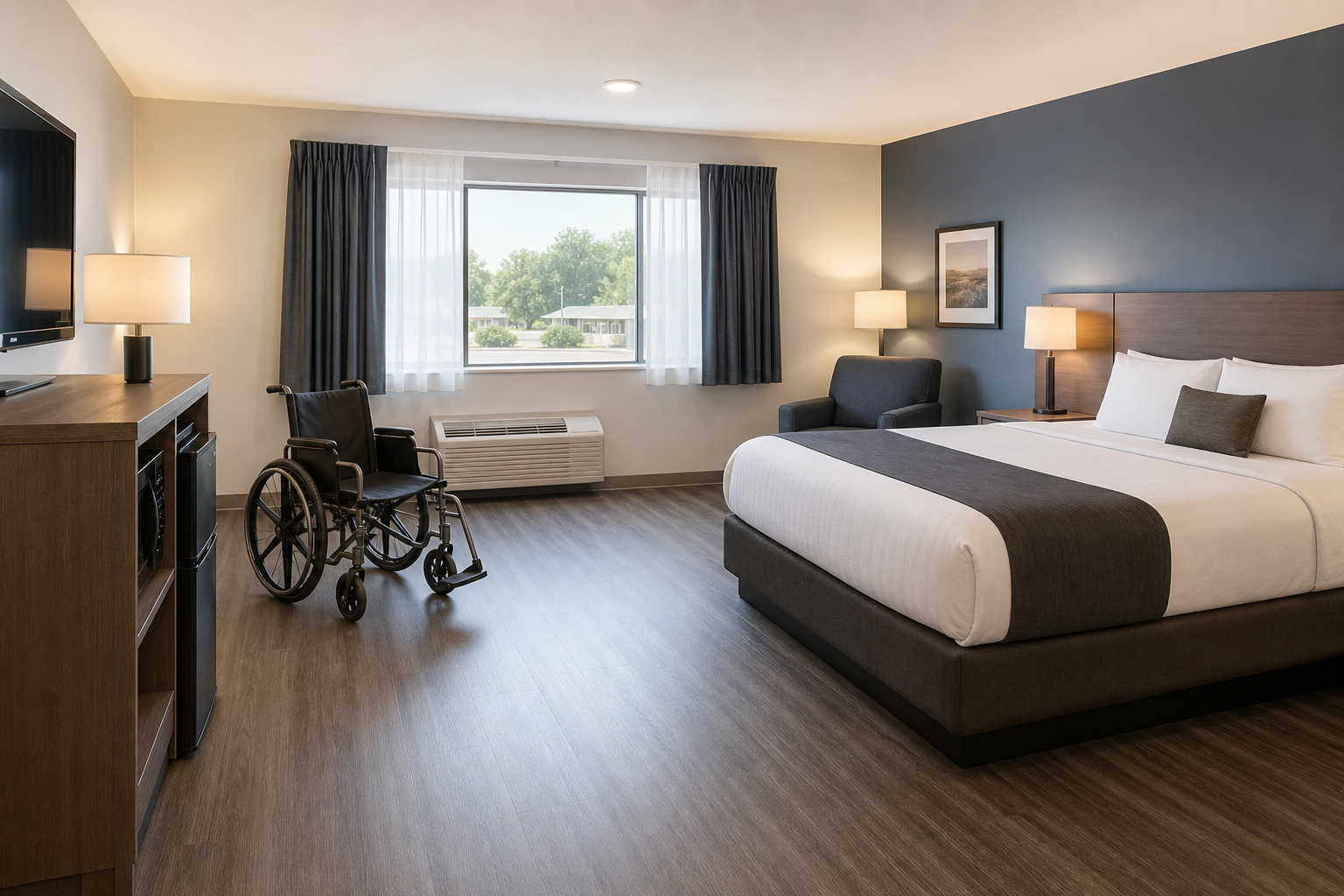
A Practical Guide to Accessible Rooms
Finding a room that truly fits your accessibility needs can transform a trip from stressful to smooth. This guide explains what to look for, how to verify features before you book, and what to do on arrival so you can rest easy. It covers mobility, sensory (hearing and vision), and cognitive considerations with practical, repeatable checklists you can use anywhere you travel.
What accessible rooms are
Accessible rooms are guest accommodations designed to reduce barriers for travelers with disabilities. They aim to provide safer, more usable spaces for a wide range of needs, such as mobility devices, low vision or blindness, Deaf or hard-of-hearing guests, and neurodivergent travelers who benefit from predictable, low-sensory environments.
Because accessibility is not one-size-fits-all, two rooms that are both labeled “accessible” can still differ greatly. The best approach is to align the room’s specific features with your personal requirements, verify details in writing before you book, and confirm again close to arrival.
Core features and specs to look for
Below are common elements travelers often consider. Use the checklists as starting points and adapt them to your needs.
- Approach and entry
- Step-free building entry and route from parking or drop-off
- Ramps or level thresholds at the building and room entrance
- Doorway width that accommodates your mobility device
- Lever-style door handles and reachable keycard readers/peep-holes
- Well-marked room numbers with tactile or high-contrast signage
- Mobility-friendly interiors
- Clear turning space for wheelchairs or scooters
- Beds with transfer space on at least one side
- Reachable controls: light switches, thermostats, curtains, and outlets
- Stable, non-slip flooring and secured rugs
- Furniture layout that avoids narrow pathways
- Accessible bathrooms
- Roll-in or low-threshold shower with handheld showerhead
- Grab bars placed near toilets and in showers
- Fold-down shower seat or space for a portable chair
- Non-slip floor surfaces and reachable towel hooks
- Knee clearance at the sink and insulated plumbing to help prevent burns
- Hearing accessibility
- Visual alarms for fire and emergencies
- Door knock/doorbell visual notification
- Telephone with volume control or TTY compatibility where available
- Caption-capable TVs and written hotel information
- Vision accessibility
- High-contrast signage and lighting with minimal glare
- Clear floor plan with minimal obstacles
- Large-print or digital information about hotel amenities
- Tactile indicators on key controls where available
- Cognitive comfort and predictability
- Quiet rooms away from heavy foot traffic or loud equipment
- Blackout curtains or eye masks to manage sensory input
- Simple, consistent room controls and uncluttered layouts
- Ability to request a room fragrance-free or with windows that open
Note: Features vary by property. Confirm specifics with the lodging provider before booking.
How to compare and book confidently
Comparing accessible rooms is easier when you standardize your evaluation. Use the following steps to streamline research and reduce surprises.
- Define your must-haves vs. nice-to-haves
- List items that are non-negotiable (e.g., roll-in shower, step-free entry, bed height range).
- Identify preferences you can flex on (e.g., visual alerts, closeness to parking).
- Check the hotel’s accessibility page, photos, and room descriptions
- Look for room-by-room details and recent photos that clearly show bathrooms, entrances, and bed layout.
- If photos are unclear, request additional images or a written description.
- Contact the property directly for specifics
- Ask for measurements where they matter to you (e.g., shower threshold height, door width, bed clearance).
- Request confirmation that specific features are guaranteed for your reservation.
- Get confirmations in writing
- Ask the property to add your accessibility needs to the reservation notes.
- Save email confirmations and bring them on your trip.
- Reconfirm shortly before arrival
- Call or email 24–72 hours in advance to re-verify key details and request any setup (e.g., shower chair).
Booking checklists you can reuse
Use or adapt these concise checklists when you research and reserve.
- Pre-book research
- Step-free route from parking/entrance to room
- Entrance and room door widths that fit your device
- Shower type and seat availability
- Grab bars near toilet and in shower
- Bed height and transfer space
- Visual alarms, captioning, and volume-controlled phone (if needed)
- Lighting controls and blackout capability
- Proximity to elevator or ground floor preference
- Quiet location away from ice machines/housekeeping closets
- When contacting the property
- Request photos or a diagram of the bathroom and entry
- Ask whether features are guaranteed for your room type
- Note setup requests (e.g., shower chair ready at check-in)
- Confirm accessible parking location and path to your room
- Verify pet/service animal policies if applicable
- Before you go
- Reconfirm room assignment and features 24–72 hours pre-arrival
- Carry a copy of written confirmations and any medical documentation you may need
- Pack small aids: portable grab bar, non-slip mat, nightlight, extension cord
Questions to ask before you book
Use these sample prompts to get precise answers and avoid assumptions.
- Entry and path of travel
- Is there a step-free path from parking or drop-off to my room? Are there ramps or elevators on that route?
- What are the door widths for the building entrance and the room entrance?
- Bathroom details
- Is the shower roll-in or low-threshold, and what is the threshold height?
- Are there grab bars by the toilet and in the shower, and where are they located?
- Is a shower chair or bench available and can it be placed before I arrive?
- Bedroom and controls
- What is the bed height from floor to top of mattress? How much transfer space is on the sides?
- Are light switches, thermostat, and curtains reachable from a seated position?
- Hearing and vision
- Do rooms have visual fire alarms and door alerts?
- Can I get large-print or digital information about amenities and safety?
- Location considerations
- Is the room near an elevator, ice machine, or other noise sources? Can I request a quieter location?
- Is accessible parking close to the room, and is the path covered or well-lit?
Arrival day and on-site tips
Even with good planning, it pays to verify on site. These steps help you settle in quickly and safely.
- Before unloading, confirm the room matches key features from your confirmation (shower type, grab bars, bed height, alarms).
- Request immediate adjustments if something is missing (e.g., place shower chair, remove a chair to widen transfer space).
- Map your safest route to exits, elevators, and the front desk. If you have a service animal, identify relief areas.
- Set up your personal aids early: non-slip mat, portable nightlight, charging cords within reach.
- Report maintenance needs promptly so they can be addressed during your stay.
Traveling with mobility aids
For travelers using canes, walkers, wheelchairs, or scooters, consistency and space planning are key.
- Measure your device’s width, length, and turning radius. Keep the numbers on your phone for quick reference when you call properties.
- Ask whether door closers are adjustable; some are heavy and can hinder entry. Staff may be able to assist or prop doors briefly while you move in.
- Confirm elevator size and weight limits if you use a power wheelchair or scooter.
- Bring a compact toolkit or supplies: duct tape, zip ties, and a hex key set can solve minor equipment issues.
- Charge devices overnight and ask about safe storage for chargers away from water sources.
Sensory and cognitive access needs
Comfort for sensory and cognitive needs often comes down to environment control and predictability.
- Request a low-scent or fragrance-free room if odors are triggers, and ask for fragrance-free cleaning on arrival day if possible.
- Ask for a room on a quieter side of the property or away from high-traffic corridors.
- Use sleep accessories: eye mask, earplugs or noise machine app, and a travel-weighted blanket if helpful.
- Request written instructions for room controls and emergency procedures. Digital copies can be easier to zoom and re-read.
- Pre-structure routines: set device reminders for meds, meals, or transitions to reduce cognitive load while traveling.
Service animals and personal support
If you travel with a service animal or a support person, plan for their comfort and logistics too.
- Confirm service animal policies and identify nearby relief areas on arrival.
- Pack extra supplies, including cleanup bags, portable bowls, and a mat to keep water off the floor.
- Discuss room setup with your support person so roles are clear (who manages luggage, who checks the route to exits, who requests adjustments).
- Ask for additional towels or blankets in advance if you use them to stage transfers or anchor portable equipment.
Documentation and communication
Clear, timely communication reduces friction and helps teams prepare the right setup.
- When booking, describe needs, not diagnoses (e.g., “roll-in shower with seat” instead of medical details).
- Request that your needs be added to reservation notes and acknowledged in the confirmation email.
- Save email threads and bring them with you. If you speak with multiple staff members, summarize agreements in writing.
- If issues arise, calmly reference prior confirmations and ask for a specific remedy (e.g., room change, equipment delivery).
Important: This guide is informational and not legal, medical, or professional advice. For legal questions about accessibility rights or requirements where you travel, consult a qualified professional.
FAQ about accessible rooms
What’s the difference between an “accessible” room and a “standard” room?
An accessible room is designed with features that reduce barriers for guests with disabilities—such as step-free access, wider clearances, roll-in showers, grab bars, and visual alarms—while a standard room may not include these elements. Because features vary, always verify the exact details for the specific accessible room you’re reserving.
How can I ensure I actually get the accessible features I need?
Ask the property to confirm features in writing and to note them on your reservation. Reconfirm 24–72 hours before arrival. On arrival, inspect the room before unloading and request adjustments immediately if something’s missing.
What should I do if the room doesn’t match what was confirmed?
Do accessible rooms cost more?
Pricing policies vary by property and by room type. The best approach is to compare rates across your dates and ask the property directly about any price differences for the accessible configuration you need.
What if I have both mobility and hearing/vision needs?
Communicate all requirements together. For example, you might request a roll-in shower plus visual alerts and high-contrast signage. Combining needs up front helps the property place you in the best-matched room and prepare any equipment before you arrive.
Plan your stay
Make Briarcliff Motel your basecamp.