
Accessible Hotel Rooms: How to Choose the Right Fit in North
Compare accessible hotel rooms in North Conway with room-specific questions about routes, bathrooms, parking, alerts, and booking details before you arrive
Last updated: October 2026
By Briarcliff Motel • Last updated: October 2026
Finding accessible hotel rooms takes more than checking a filter on a booking site. A useful room must work as a complete chain: from the vehicle and parking space, along the route to the entrance, through the doorway, around the bed, and into the bathroom. Features that help guests with hearing, vision, or communication needs should also be confirmed for the specific room assigned.
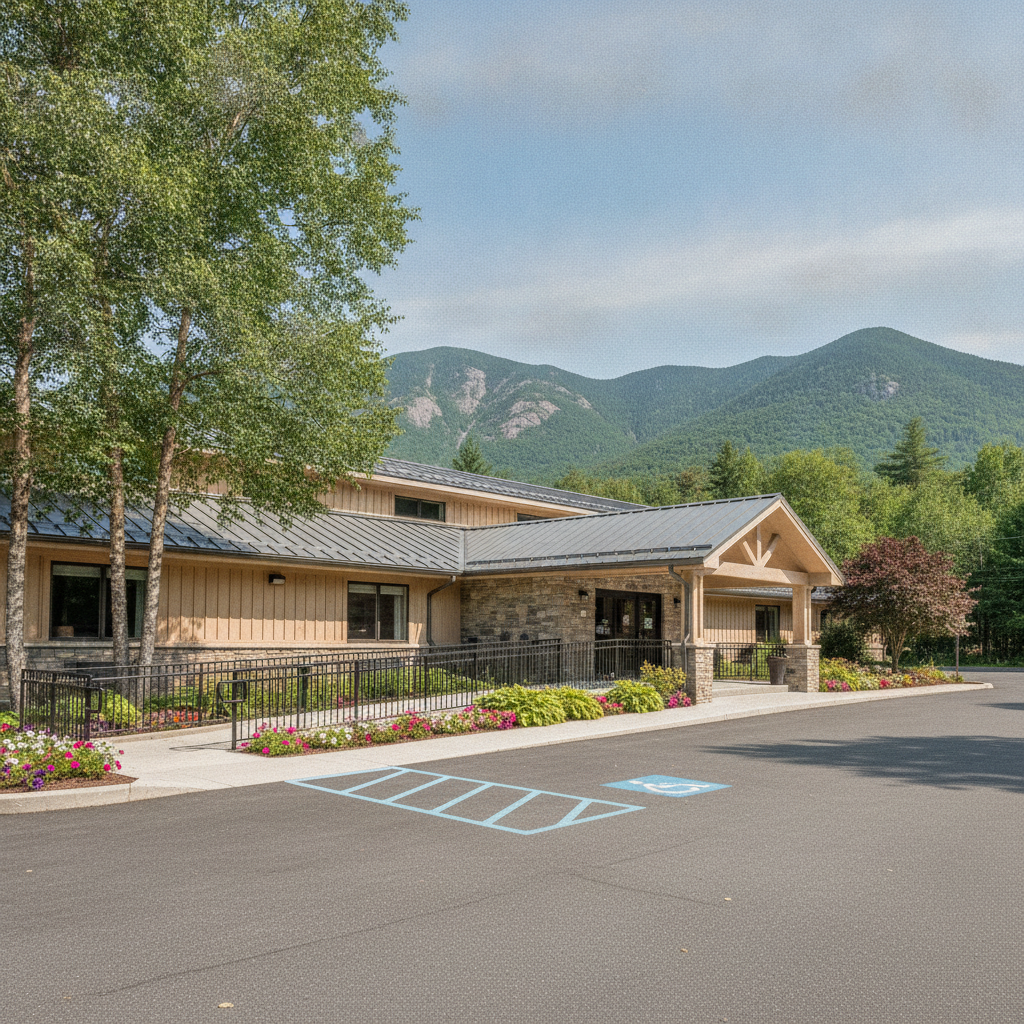
Briarcliff Motel is a renovated, family-friendly property at 2304 White Mountain Highway in North Conway, New Hampshire. The motel offers rooms adjacent to convenient parking, mountain-view rooms, enclosed porches facing an outdoor heated pool, and office hours from 8 AM to 10 PM EST. Because room configurations can differ, a short conversation with the team is the best way to discuss your priorities before arrival.
How to Plan an Accessible Stay in North Conway
Start by writing down the features that are essential for you and separating them from preferences. For example, a roll-in shower may be non-negotiable, while a room near the pool may simply be convenient. This distinction helps the front desk focus on the details that affect safety and independence.
- Describe your equipment and transfer method: mention a manual or power wheelchair, scooter, walker, service animal, or other relevant equipment.
- Confirm the full route: ask about accessible parking, the path to the entrance, curb cuts, ramps, thresholds, and any exterior slopes.
- Verify the doorway and room: ask for clear door width, turning space, bed clearance, and the location of furniture.
- Match the bathroom to your needs: distinguish between a roll-in shower and a transfer tub, and ask about seating, grab bars, and a handheld shower.
- Discuss sensory and communication features: ask whether the assigned room includes visual alarms, door alerts, strong lighting, or other supports.
- Record the arrangement: keep the confirmation email and call again before arrival if the details are especially important.
North Conway can be busy during foliage, ski, holiday, and summer periods. Reserving earlier gives you more opportunity to compare room configurations, but early booking does not replace verification. The most dependable approach is to reserve the appropriate room category and then confirm the actual features with the property.
For a broader look at available layouts, the North Conway motel rooms guide explains how to compare room types. You can also review the renovated rooms overview when balancing room placement, scenery, and the distance from parking.
What Are Accessible Hotel Rooms?
Accessible hotel rooms are guest rooms and associated routes designed to reduce physical, sensory, or communication barriers for people with disabilities. In the United States, lodging information should describe more than the room itself: guests need useful information about accessible entrances, the route to check-in and essential services, and the route to accessible guest rooms.
The label does not tell you whether a room will suit every traveler. One guest may need a no-curb shower and space beside the bed for a transfer. Another may need visual alerts, clearer lighting, or an accessible communication device. A third may primarily need a short, step-free route from an accessible parking space.
Federal accessibility rules establish important requirements, but a legal label is not a substitute for a room-specific conversation. The ADA Title III lodging regulations are a useful reference for understanding why hotels should provide clear information about routes and accessible rooms.
Room features to verify
- Accessible route: ask whether the route from the relevant parking area to the room is step-free and whether a curb cut or ramp is involved.
- Door and threshold: request the clear opening rather than the nominal door size, and ask whether the threshold creates a problem for your equipment.
- Turning and transfer space: ask where furniture is positioned and whether there is adequate space beside the bed, in the bathroom, and near the entry.
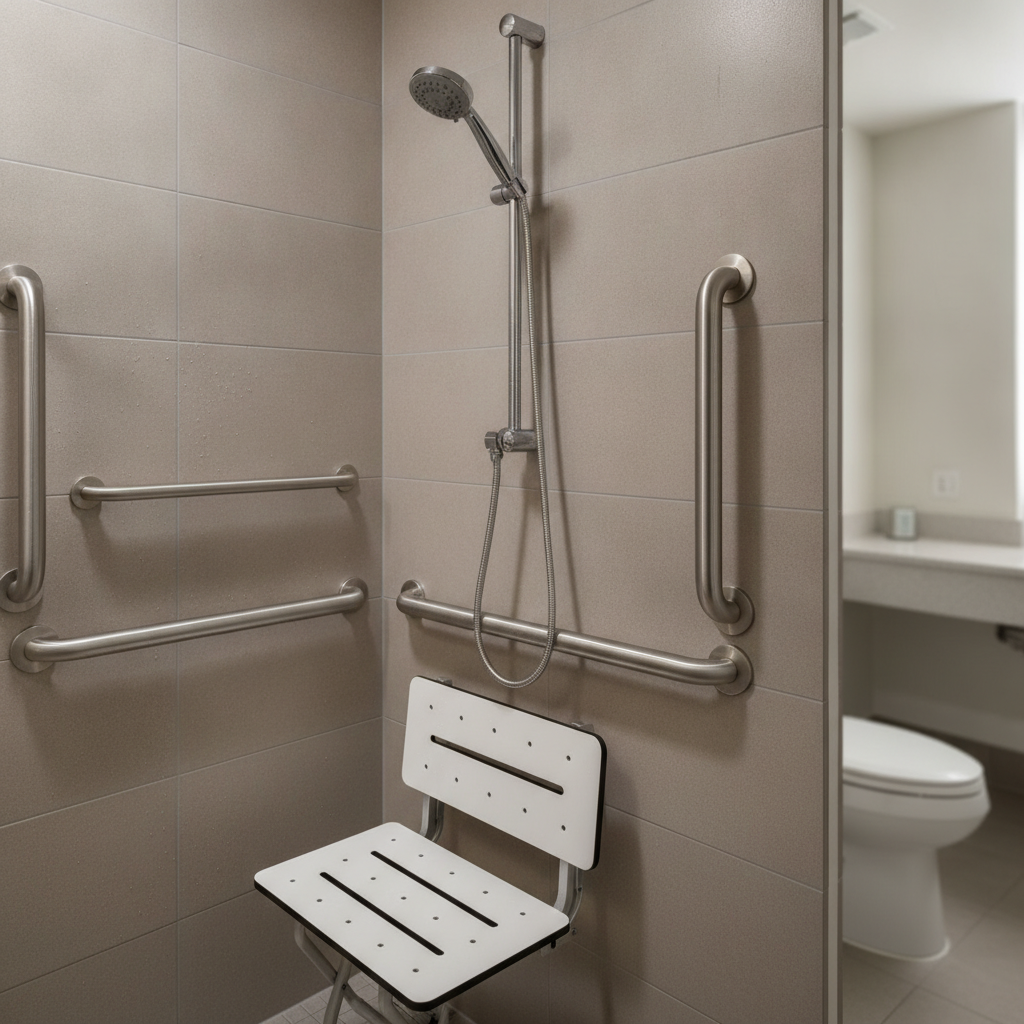
- Bathroom arrangement: clarify whether the shower is roll-in or transfer style, whether a seat is provided, and where the grab bars are located.
- Controls and storage: ask about thermostat, switches, outlets, closet rods, shelves, and other frequently used items.
- Communication features: confirm visual alarms, door notifications, telephone access, and any requested orientation or written instructions.
Use your own measurements when possible. A wheelchair width, scooter turning requirement, preferred seat height, or transfer technique may matter more than a general dimension quoted by a property.
Why Room-Specific Accessibility Matters
Accessibility affects independence, energy, comfort, and confidence throughout the stay. A short route from parking can conserve energy for a day in the White Mountains, while a bathroom that matches your transfer method can prevent an exhausting or unsafe improvisation after a long drive.
Small barriers can have an outsized effect. A threshold that is manageable for one person may stop another person’s mobility device. A shower described as accessible may still require a transfer, and a room with a visual alarm may not be the room ultimately assigned unless that detail is recorded and confirmed.
Benefits of matching the room to the traveler
- Safer transfers: suitable seating, support bars, and a handheld shower can make bathing more controlled.
- Less fatigue: a shorter route from the vehicle reduces distance, slopes, weather exposure, and repeated trips.
- Greater independence: reachable controls, storage, lighting, and clear floor space reduce the need for assistance.
- Better nighttime confidence: appropriate alarms, door alerts, and pathway lighting support guests with hearing or vision needs.
- Fewer surprises: a documented room description gives the property and traveler a shared understanding before check-in.
Accessibility planning can also help families and companions. Parents, older travelers, and people recovering from an injury may benefit from a lower-effort route, a well-lit room, and a bathroom with stable supports even when they do not use a wheelchair.
How to Check the Route From Parking to the Room
Think of arrival as a sequence rather than a single feature. First identify the parking or drop-off point. Then trace the path to the entrance, through check-in if necessary, and to the assigned room. Finally, consider the route inside the room to the bed and bathroom.
Parking and arrival
Ask whether accessible parking is close to the room or entrance and whether an access aisle is available for side transfers. If you use a van, lift, or ramp, explain the clearance you need instead of asking only whether parking is “nearby.” A property may be able to discuss the most practical room placement when it understands how you arrive.
Weather also matters in the Mt. Washington Valley. Rain, snow, and ice can change how manageable a slope or outdoor path feels, so ask about lighting, surface conditions, and the shortest route for your arrival time. If you expect to arrive after dark, confirm the late-arrival process and how you will identify the correct entrance.
Entry and interior space
Ask for the clear doorway measurement, threshold description, door swing, and handle type. Inside the room, confirm whether furniture can be moved or whether the bed, desk, and bathroom route already provide the space you need. Photos are helpful, but a direct description is often better for identifying a specific clearance.
Bathroom details
“Accessible bathroom” can describe several configurations. Ask whether the shower is roll-in or transfer style, whether a fixed or fold-down seat is present, whether the showerhead is handheld, and where the grab bars are positioned. If you use a shower chair or transfer board, explain its dimensions and ask whether the available floor space works for it.
The ADA lodging guidance for guests who are blind or have low vision also explains why hotels should provide usable information and assistance with services when requested. This is relevant when you need large-print, Braille, recorded, or verbal instructions rather than relying on standard printed material.
Types of Accessibility Features to Compare
There is no single room setup that works for every guest. Comparing the feature groups below can help you describe your needs precisely when speaking with a North Conway motel.
Mobility-focused features
- Step-free routes from parking or drop-off to the room.
- Doorways and interior circulation that accommodate the traveler’s mobility device.
- Roll-in showers, transfer tubs, shower seats, handheld showerheads, and appropriately positioned supports.
- Clear space beside the bed and usable access to switches, thermostats, outlets, storage, and bathroom fixtures.
Hearing-focused features
- Visual fire or smoke alarms where provided for the room category.
- Doorbell, telephone, or other visual notification equipment when requested.
- Clear written information and a reliable method for communicating with the front desk.
Low-vision and orientation features
- Good lighting along the arrival route and at room controls.
- High-contrast or easy-to-identify fixtures where available.
- Verbal orientation to the room, route, emergency information, and important services.
Guests traveling together may also want adjoining or nearby rooms, a quiet location, or a route that reduces repeated trips. The family-friendly motel guide offers additional planning ideas for multigenerational stays, children, and companions.
A Quick Comparison Checklist for Accessible Hotel Rooms
Use this table as a call script. Replace general questions with your own measurements and priorities, and ask the property to describe the room that will actually be assigned.
| Area | Question to ask | Why it matters |
|---|---|---|
| Parking | Which parking or drop-off point gives me the shortest step-free route? | Distance, slopes, and weather exposure affect energy and safety. |
| Exterior route | Are there steps, a curb, a ramp, or an uneven surface between the vehicle and entrance? | The room can be accessible while the arrival route is difficult. |
| Door | What is the clear opening, threshold type, and handle style? | These details determine whether equipment can enter comfortably. |
| Bed and room | Where is the clear transfer space, and can furniture be repositioned? | Placement matters as much as the room’s overall size. |
| Shower | Is it roll-in or transfer style, and is a seat and handheld showerhead provided? | The configuration must match your transfer method. |
| Toilet and sink | What supports, clear floor space, and usable sink access are available? | Bathroom fixtures need to work together, not just individually. |
| Communication | Does this room include visual alerts or other requested equipment? | Features may vary by room and should be assigned in advance. |
| Late arrival | How will I enter the property and find the room after office hours? | A confirmed process prevents an avoidable barrier at check-in. |
Best Practices for Booking Accessible Hotel Rooms
Book through the property or a booking channel that lets you explain specific requirements. A general request such as “accessible room needed” may not communicate whether you require a roll-in shower, a visual alarm, a nearby parking space, or a particular transfer layout.
Use a three-stage booking process
- Prepare: list must-have features, equipment dimensions, transfer method, preferred room location, and arrival time.
- Verify: speak with the property and ask room-specific questions about the route, doorway, bathroom, bed placement, controls, and alerts.
- Confirm: request written notes on the reservation, save the response, and reconfirm before travel if the stay is important or the season is busy.
Ask for recent photographs when a visual detail is difficult to describe. A photo can show the shower floor, seat, furniture arrangement, and room entrance, but it should supplement rather than replace a conversation about measurements and route conditions.
For additional booking and value planning, review the North Conway budget lodging tips and the affordable motel rooms guide. These resources can help you organize dates and priorities while you focus this call on accessibility.
North Conway Planning Considerations
North Conway is a convenient base for White Mountain activities, dining, shopping, and seasonal recreation, but the best room location depends on your itinerary. A traveler spending most of the day on Main Street may value a short route and easy return access. Someone planning a full-day excursion may prioritize a straightforward arrival, a comfortable bathroom, and a quiet room for recovery.
- Foliage and ski periods: book and verify earlier because accessible room inventory may be limited even when standard rooms remain.
- Wet or snowy weather: ask about the outdoor route, lighting, surface transitions, and the most practical drop-off point.
- Attractions and errands: allow extra time for loading equipment, transfers, and navigating busy areas rather than assuming every stop has the same access conditions.
- Long stays: ask about storage, laundry-related needs, housekeeping communication, and the easiest route for repeated entry and exit.
For a wider comparison of property types and locations in the area, see the North Conway lodging options guide. The North Conway motel guide can also help you consider location, timing, and practical arrival questions before choosing where to stay.

Examples of Matching Features to Real Needs
Power wheelchair traveler
This traveler may begin with access-aisle clearance, a short step-free route, the doorway, and the bathroom. The key questions are whether the chair can enter and turn as needed, whether the bed transfer space is usable, and whether the shower configuration matches the person’s method of bathing.
Guest with hearing loss
This guest may prioritize visual alerts, door notifications, and a clear method for contacting the front desk. Ask whether the features are permanently installed or provided as equipment, and confirm that the request is attached to the assigned room rather than noted only as a general preference.
Guest with low vision
This traveler may benefit from a verbal orientation, consistent lighting, high-contrast fixtures, and clear instructions. Request information about the route from the entrance to the room and ask the team to explain controls and emergency procedures in the format that works best for you.
Family or companion group
A family may need a room close to parking, enough space for mobility equipment, and a bathroom arrangement that works for both the guest and a care partner. Discuss nearby rooms, quiet preferences, and the practical route to shared amenities without assuming that every room in the same category has the same placement.
Planning With Briarcliff Motel
Briarcliff Motel’s central North Conway location, rooms adjacent to convenient parking, mountain-view options, enclosed porches, and extended office hours can support different travel styles. The team can discuss room placement, arrival timing, and the shortest practical route based on availability and the features you describe.
When you contact the motel, have your must-have list ready. Explain whether you need a roll-in shower, a particular transfer arrangement, proximity to parking, communication support, or a late-arrival plan. This gives the team useful information for discussing the available room rather than relying on a broad category name.
Accessibility should remain the first decision. Once the route and room work for you, you can weigh additional preferences such as a mountain view, enclosed porch, pool-facing outlook, or proximity to the activities on your itinerary.
Frequently Asked Questions About Accessible Hotel Rooms
How can I confirm that a hotel room has a true roll-in shower?
Ask whether the shower has a level entry with no curb, whether a seat is provided, and whether the showerhead is handheld. Also ask about the bathroom floor space, support bars, and the room’s specific configuration. A recent photo can help, but your transfer method and equipment measurements should guide the final decision.
Can I request an accessible room closer to parking?
Yes, make the request when booking and explain why proximity matters. Ask which route from parking is step-free and whether an access aisle or suitable drop-off point is available. Have the preference added to the reservation, then reconfirm it before arrival because room placement depends on inventory.
Do accessible hotel rooms always include visual alarms?
No. Accessibility features can vary by room and by the needs the room is intended to support. Ask whether the exact room assignment includes visual fire or smoke alerts, door notifications, or other equipment you require, and confirm how those features will be provided.
When should I reserve accessible hotel rooms in North Conway?
Reserve as early as practical for foliage, ski, holiday, and summer periods because accessible room choices may be more limited than standard inventory. After booking, verify the route, doorway, bathroom, communication features, and late-arrival plan. A written confirmation gives you a useful reference if details need to be reviewed before the trip.
Choose the Room That Matches Your Needs
The most effective way to find accessible hotel rooms is to replace a broad label with specific questions. Confirm the route from parking, the doorway and room layout, the bathroom configuration, and any hearing or vision supports required for the stay.
For a North Conway visit, Briarcliff Motel can help you discuss room placement, arrival timing, parking proximity, and the features that matter most to your travel party. Contact Briarcliff Motel with your checklist so you can plan a more predictable journey from vehicle to room.
Plan your stay
Make Briarcliff Motel your basecamp.